Picket Fence Embroidery Design Review
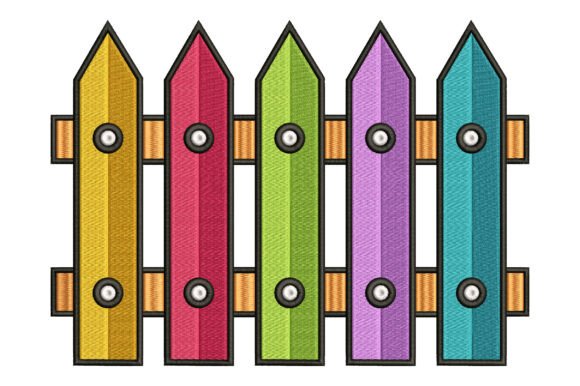
As a professional embroidery designer specializing in commercial merchandise and branded assets, I approach every new machine embroidery design with a critical eye toward production viability. When evaluating the Picket Fence Embroidery Design for small business use, my primary focus shifts from mere aesthetics to functional application. This design, described as featuring a row of bright fence panels, immediately suggests a specific visual personality: friendly, rustic, and approachable. For business owners in the café, boutique, florist, or handmade sector, this aesthetic is valuable. However, translating a "playful" digital file into a durable finished product requires understanding how linear elements like fence pickets behave under the needle.
Visual Personality and Brand Identity Alignment
The first impression of the Picket Fence Embroidery Design is undeniably charming, but charm must be balanced with professionalism in commercial embroidery. The vertical lines inherent in a picket fence motif create a structured grid that can anchor a logo or brand name effectively. For a bakery or pet brand, this structure implies stability and tradition while the colorful description suggests creativity. When integrating this into your brand identity, consider that horizontal expansion is natural for this design. It works exceptionally well as a bottom border for a chest logo on staff uniforms or as a framing element above a business name on an apron.
However, because the description notes "bright fence panels," you must evaluate thread contrast carefully. High-saturation colors can sometimes bleed visually when stitched next to one another without adequate spacing. For a premium handmade product line, I recommend testing muted or tonal variations of the bright colors to ensure the design reads as sophisticated rather than juvenile, unless your target demographic specifically seeks playful small business merch. While categorized under Back To School, this design has broader utility for year-round branding if the color palette is adjusted to match your corporate or shop aesthetic.
Performance Across Merchandise Applications
In real-world business scenarios, versatility is key. The Picket Fence Embroidery Design shows strong potential for several specific applications:
- Apron Embroidery: The horizontal orientation of a fence design makes it ideal for apron pockets or hemlines. It provides a wide footprint that balances the garment without overwhelming the wearer.
- Tote Bag Design: Canvas totes are staples for boutiques and markets. This design can serve as a decorative separator between a shop logo and contact information, adding texture and visual interest to plain cotton canvas.
- Embroidered Patch Production: Because fences consist of distinct vertical units, this design digitizes well for patches. You can easily isolate individual pickets to create smaller badge variations or use the full row for a rectangular rocker patch.
- Custom Apparel Accents: On work shirts or polos, placing this design on the sleeve cuff or back yoke adds a subtle branded detail that feels custom rather than generic.
For Etsy sellers and craft businesses, this design serves as excellent clipart-style branding for packaging. Stitching it onto muslin drawstring bags or fabric tags elevates the unboxing experience, reinforcing the value of the handmade product inside.
Technical Constraints and Production Warnings
Despite its versatility, the Picket Fence Embroidery Design presents specific technical challenges that decorators must manage. Linear designs are unforgiving regarding registration. If your machine tension is off, the gaps between pickets may close up or become uneven, ruining the clean look required for professional merchandise.
Stitch Density and Fabric Texture
Fence panels often involve satin stitches or dense fill areas. When applying this to textured fabrics like linen aprons or waffle-knit towels, you risk the design sinking into the weave. You must verify the stitch density before running production. If the design is too dense for your chosen substrate, it will cause puckering or stiffness. Conversely, if it is too light, the fabric grain will show through, making the branding look cheap. Always pair this design with an appropriate stabilizer; for stretchy knits used in staff tees, a cut-away stabilizer is non-negotiable to maintain the straight lines of the fence over time.
Cap Embroidery and Curved Surfaces
Use extreme caution when adapting the Picket Fence Embroidery Design for cap embroidery. Caps have a curved surface that distorts horizontal lines. A straight fence row may appear bowed or warped once removed from the hoop. If using this for headwear, you may need to manually distort the embroidery file in your software to compensate for the curve, or resize the design to fit only the flat center panel of the cap. Never assume a flat-design digitization will translate perfectly to 3D surfaces without a test run.
Designer Notes for Commercial Success
Before committing this digital embroidery file to a bulk order of uniforms or merchandise, follow this professional validation checklist. These steps protect your investment and ensure client satisfaction.
- Verify Specifications: The product description does not list exact stitch counts, dimensions, or included formats. You must check these details against your machine’s capabilities and your intended hoop size before purchase. Ensure the file format matches your equipment.
- Create a Printable Mockup: Before stitching, place a scaled image of the design on a photo of the actual garment. This helps visualize scale and placement relative to seams, pockets, and zippers.
- Test in Black and White: Run a sample using only black and white thread first. This removes color distraction and allows you to inspect the structural integrity of the digitizing, checking for jump stitches, trims, and outline alignment.
- Evaluate Washability: If this is for staff uniforms or kitchen aprons, wash and dry the test swatch three times. Fence designs with tall, thin elements can snag or fray. Confirm the design holds up to industrial laundering standards.
- Check Licensing: Confirm the license permits commercial use on physical products for sale. Some files are restricted to personal use only, which would violate terms if used on merchandise sold in your shop.
- Assess Small Size Legibility: If you plan to shrink this design for tiny labels or sleeve cuffs, check if the internal details of the fence panels remain distinct. Complex shading often turns to mud at sizes under two inches.
Enhancing Customer Trust Through Quality Execution
Ultimately, the Picket Fence Embroidery Design is more than a decorative element; it is a communication tool. In the competitive landscape of local business and online retail, consistent, high-quality branding signals reliability. A poorly executed embroidery job with misaligned fences or thread breaks subconsciously tells customers that your business lacks attention to detail. By treating this design asset with professional rigor—testing, stabilizing, and validating—you transform a simple graphic into a marker of quality.
When used correctly on custom apparel and accessories, this design bridges the gap between nostalgic charm and modern commerce. It invites customers into your brand story while maintaining the polished appearance necessary for trust. Whether you are outfitting a team of baristas or branding artisan goods, taking the time to master the technical execution of this design ensures that your merchandise reflects the true value of your business. Always prioritize the physical reality of the stitch over the digital perfection of the screen, and your branded products will stand out for all the right reasons.