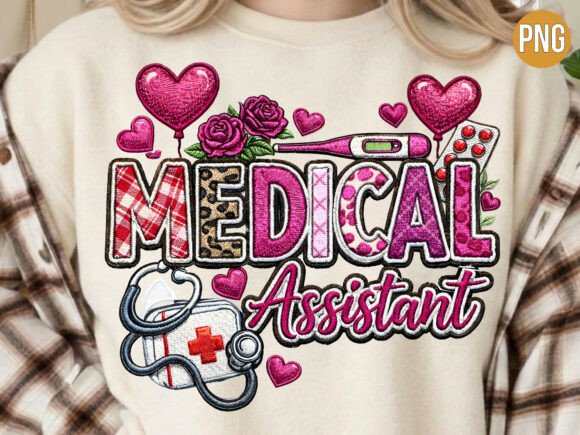
Medical Assistant Embroidery Patch PNG Review
As a professional embroidery designer and product reviewer, I approach every new digital asset with a healthy dose of skepticism. In the world of Crafts and Graphics, there is a significant difference between a file that looks crisp on a computer screen and one that actually stitches out beautifully on fabric. When evaluating the Medical Assistant Embroidery Patch PNG, my primary focus is not just the aesthetic appeal of the artwork, but its structural integrity as a machine embroidery design. For small business owners, Etsy sellers, and makers creating custom apparel or personalized gifts, understanding how this specific design translates from pixels to thread is essential for maintaining product quality and customer trust.
First Impressions: Visual Hierarchy and Professional Tone
Upon opening the Medical Assistant Embroidery Patch PNG, the immediate impression is one of clean, professional clarity. Medical themes can sometimes feel sterile or overly complex, but this design strikes a balanced mood. It feels respectful and recognizable without being cluttered. For a handmade product intended for healthcare professionals, this visual personality is crucial. The layout suggests a design that respects the boundaries of an embroidered patch format, likely utilizing distinct shapes that will hold up well when digitized.
From a designer’s perspective, the graphic elements appear optimized for translation into stitch types. I look for clear separation between elements that would typically be rendered as satin stitch borders and fill stitch interiors. The visual weight seems appropriate for both commercial embroidery projects and personal use. Whether you are planning a sweatshirt embroidery project for a clinic team or a personalized gift for a graduating student, the design communicates competence. However, because this is a premium digital design file often used for Print on Demand and creative assets, it is vital to verify if the included files are pre-digitized embroidery formats or high-resolution source art intended for custom digitizing. Always confirm the file type matches your machine's requirements before purchasing.
Real-World Application: Stitching Out a Tote Bag Prototype
To truly evaluate this asset, I mentally simulate a real-life production scenario. Let’s consider a common request in my shop: a custom canvas tote bag for a medical assistant conference. Canvas is a sturdy fabric, but it has a visible texture that can swallow fine details. When applying the Medical Assistant Embroidery Patch PNG to this context, I assess how the design interacts with fabric texture.
In this scenario, the design needs to serve as a focal point. If the artwork features intricate linework or tiny text, I would be concerned about legibility on woven canvas. A successful tote bag design requires bold lines and adequate spacing. If this PNG serves as the basis for an applique design, it offers excellent potential for reducing stitch density while adding tactile interest. Appliqué is particularly effective for patches on bags because it covers large areas quickly and creates a durable, washable surface. Conversely, if the design relies entirely on dense fill stitches, I would need to test the stabilizer choice carefully to prevent the canvas from puckering or becoming too stiff. This practical testing phase determines whether the final product feels like a high-end boutique item or a cheap promotional giveaway.
Navigating Fabric Limitations and Hoop Constraints
Not every project is as forgiving as a canvas tote. As an experienced reviewer, I must highlight where caution is necessary. The Medical Assistant Embroidery Patch PNG may require adjustments depending on your target substrate.
- Stretchy Fabrics: If you are creating custom apparel like scrubs or t-shirts, the design’s density becomes critical. High-density graphics on knit fabrics can cause tunneling or distortion. You may need to modify the underlay or reduce stitch count to maintain the garment's drape.
- Curved Surfaces: For cap or hat embroidery, flat patch designs often distort. Ensure the aspect ratio and detail level are suitable for curved hooping. Tiny corners or sharp angles in the PNG might need smoothing to prevent needle breaks or registration issues on caps.
- Dark vs. Light Fabrics: Contrast is key. Test the design in black and white mockups to see if the values hold up. On dark fabrics, you may need to add a white underlay or adjust thread colors to ensure the medical symbols remain distinct and readable.
- Small Hoop Sizes: Scaling down is often more dangerous than scaling up. If you intend to use this for baby embroidery or sleeve cuffs, verify that the smallest details do not merge when reduced. Text smaller than 4mm rarely embroiders clearly without specialized digitizing.
Impact on Product Value and Brand Perception
For Etsy sellers and craft business owners, the quality of your embroidery file directly correlates to perceived value. A poorly executed stitch-out screams "amateur," regardless of how beautiful the original PNG looked. The Medical Assistant Embroidery Patch PNG, when utilized correctly, enhances brand consistency. Healthcare clients expect precision; a jagged edge or misaligned satin stitch on a medical patch undermines that expectation.
Using a premium digital design file signals to your customers that you invest in quality assets. This attention to detail builds buyer engagement and justifies higher price points for finished products. Furthermore, versatile graphics allow for cross-platform marketing. You can use the high-quality PNG for printable mockups on your website or social media, ensuring that what the customer sees online matches the physical embroidered patch they receive. This alignment between digital preview and physical reality is the cornerstone of trust in the handmade marketplace.
Essential Designer Notes for Successful Execution
Before you load this design into your machine or list it in your shop, adhere to these professional best practices:
- Verify Licensing: Since this is described as a digital design file for creative projects and Print on Demand, double-check the license terms. Confirm whether you can sell finished physical items, digital embroidery files, or both. Respecting intellectual property protects your business.
- Test on Scrap Fabric: Never stitch a new design directly onto a client’s garment. Use a scrap of the exact fabric and stabilizer combination you plan to use for the final project. Check for puckering, thread breaks, and alignment.
- Analyze Stitch Density: Open the embroidery file in your software. Look for areas of excessive density that could cause needle deflection or fabric damage. Adjust compensation settings if necessary to account for fabric push-and-pull.
- Thread Color Validation: Screen colors differ from thread colors. Physically compare your thread palette against the design to ensure accurate representation of medical symbols and branding.
- Stabilizer Selection: Match the stabilizer to the fabric weight and design density. A tear-away might suffice for a patch on denim, but a cut-away is likely mandatory for stretchy knits or long-term wearability.
The Medical Assistant Embroidery Patch PNG represents a valuable asset for makers targeting the healthcare niche, provided it is treated with technical respect. By understanding its behavior across different fabrics, hoops, and applications, you transform a simple digital graphic into a professional, market-ready product. Whether you are crafting holiday embroidery for staff gifts or building a line of commercial merchandise, success lies in the details of execution. Always prioritize testing and verification to ensure your creative vision translates perfectly from screen to stitch.