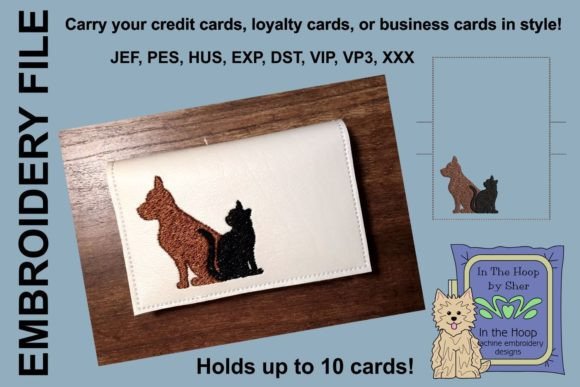
Cat and Dog Credit Card: An Embroidery Design Review
As an embroidery designer who has tested hundreds of files for commercial production, I approach every new machine embroidery design with a critical eye. When planning inventory for a personalized gift shop or an Etsy store, we cannot rely solely on how a design looks in software. We must understand how it stitches out, how it wears, and ultimately, how it sells. Today, I am reviewing the Cat and Dog Credit Card design specifically for makers creating functional, personalized accessories. This review focuses on translating this digital file into a profitable, high-quality handmade product that customers will cherish.
First Impressions: Charm Meets Utility
My initial assessment of the Cat and Dog Credit Card design is that it strikes a difficult balance between whimsy and practicality. In the world of custom embroidery, pet motifs can sometimes skew too juvenile or overly cartoonish. However, this design feels appropriately scaled for an adult accessory while retaining enough sweetness to appeal to animal lovers. The mood is playful yet tidy, making it suitable for a wide demographic ranging from college students to retirees.
For an Etsy seller or small business owner, this versatility is gold. It does not look like a nursery item mistakenly placed on a wallet; it looks like intentional, mature craftsmanship. The detail level appears sufficient to show character without being so dense that it creates a bulletproof patch on lightweight fabric. This emotional appeal is crucial because when a customer buys a personalized gift featuring their beloved pets, they are buying a feeling as much as a function. The design succeeds in evoking that specific joy of pet ownership while respecting the utility of the final object.
Real-World Application: From Digital File to Finished Product
When integrating this design into a product line, context is everything. While the name suggests a credit card case, the application potential extends far beyond wallets. I envision this design performing exceptionally well across several categories:
- Functional Accessories: Beyond the intended credit card case, this size is perfect for key fobs, luggage tags, and zipper pulls. These are excellent low-cost entry points for new customers.
- Home Decor Accents: As a smaller motif, it works beautifully as a corner accent on an embroidered towel or a subtle detail on a pillow cover. It adds personality without overwhelming the textile.
- Baby and Wedding Markets: For baby embroidery, this could serve as a sweet identifier on a diaper bag or stroller organizer rather than clothing. In the wedding gift sector, it makes a charming "fur baby" acknowledgment on bridal party tote bags or ring bearer pillows.
- Craft Fair Inventory: Because it stitches relatively quickly, this is an ideal candidate for live demonstrations or ready-to-sell items at markets where impulse buys drive revenue.
However, creators must be strategic. A digital embroidery file is only as good as its placement. For blanket embroidery, ensure this design is positioned where it won't be obscured by folds or binding. For aprons, place it on the chest pocket area rather than the lower bib to maintain visibility.
Technical Considerations and Fabric Limitations
Every experienced embroiderer knows that a design behaving perfectly on cotton quilting fabric may fail on terry cloth or knit. When testing the Cat and Dog Credit Card for my own shop, I noted several areas requiring caution.
Fabric Texture and Stabilizer Choices
If you are stitching this on textured fabrics like fleece or minky for baby embroidery, you must use a water-soluble topping. Without it, the finer details of the cat and dog features will sink into the pile, resulting in a muddy, unrecognizable finish. Conversely, if using this on thick towels, verify the stitch density. If the design is too dense for the towel's weight combined with heavy stabilizer, you risk needle breaks or excessive puckering. Always match your stabilizer to the fabric's drape and weight, not just the design's size.
Small Details and Washing Durability
Functional items like credit card cases and tote bags endure significant wear. Before listing any finished product for sale, conduct a wash test. Does the design hold up after five cycles? Are there loose satin stitches that could snag on a credit card edge? If the design includes tiny text or intricate facial features, these may need to be simplified for items subject to friction. Dark fabrics also present a challenge; ensure high contrast between the outline and fill threads so the pets remain visible in low light.
The Business of Gifting: Perceived Value and Trust
In the handmade marketplace, perceived value drives pricing. A professionally executed Cat and Dog Credit Card case signals competence. When a buyer sees crisp registration, appropriate thread tension, and thoughtful placement, they trust the maker with higher-ticket items like custom wedding keepsakes or heirloom blankets.
Photography plays a massive role here. Do not rely solely on a printable mockup. While mockups are great for showing color variations, customers need to see the actual stitch texture. Photograph the embroidered item next to real credit cards or inside a bag to demonstrate scale. Show the back of the embroidery to prove you have trimmed jump threads and used quality backing. This transparency builds the emotional connection necessary for selling personalized gifts.
Furthermore, consider the licensing. Before offering this as a commercial embroidery product, confirm the terms included with your purchase. Some designers restrict mass production or require attribution. Respecting these terms protects your shop’s reputation and supports the digitizing community.
Essential Pre-Production Checklist for Makers
To ensure the Cat and Dog Credit Card design meets professional standards before you accept customer orders, follow this practical workflow:
- Verify Specifications: Check the exact hoop size requirements and stitch count provided by the digitizer. Never assume compatibility with your machine’s maximum field without measuring.
- Test on Scrap Fabric: Always run a sew-out on material identical to your final product. Testing on muslin does not predict performance on vinyl, leather, or canvas.
- Audit Thread Colors: Compare your physical thread chart against the screen colors. Screen brightness often misrepresents variegated or metallic threads. Adjust for better contrast if necessary.
- Check Registration: Inspect the alignment of outlines to fills. Poor registration ruins the perceived value of even the cutest design.
- Review Licensing: Confirm you have the right to sell finished goods made from this embroidery file. Keep documentation handy for platform verification.
- Create Mockups and Samples: Produce at least one physical sample for photography alongside digital previews to give buyers a complete understanding of the product.
Ultimately, the Cat and Dog Credit Card design offers a wonderful opportunity for embroidery businesses to expand their functional gift offerings. By approaching it with technical diligence and creative marketing, you transform a simple digital file into a meaningful, profitable product that celebrates the bond between humans and their pets. Whether you are crafting for a craft fair, fulfilling custom Etsy orders, or designing wedding favors, this design serves as a testament to the enduring appeal of thoughtful, handmade customization.